
SoleMan: Heartfelt AI Chat
dera Nigeria limitedEntertainment
4.7267.00 Reviews
- Version
- 1.1.0
- Installs
- 100.00K
- Age Rating
- Mature 17+
Screenshots


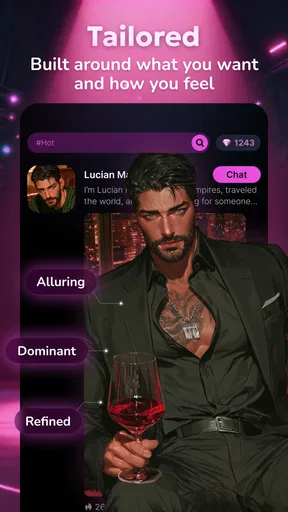

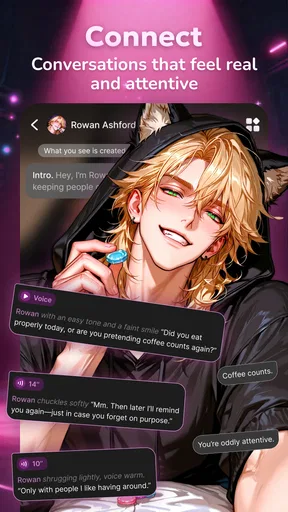
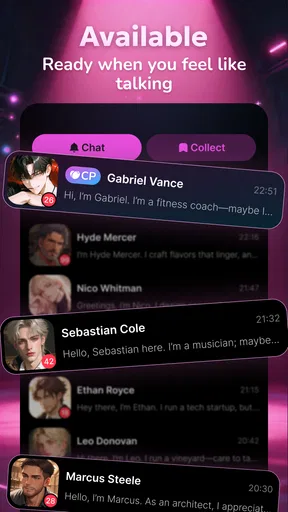
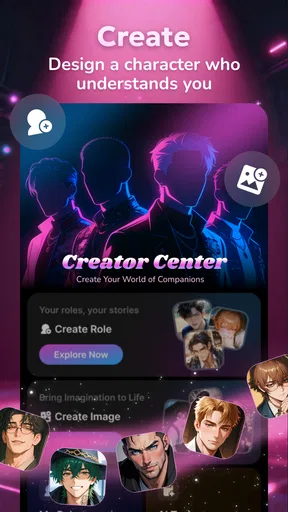
Our Review of SoleMan: Heartfelt AI Chat
 Analysis by Appyee
I approached SoleMan: Heartfelt AI Chat as an entertainment app for people who want a more personal kind of conversation than a standard chatbot usually offers. Its focus is an AI boyfriend experience built around affectionate chats, spoken interaction, and romantic storytelling. That combination gives it a noticeably different mood from general-purpose assistants, but it also means the app works best when you understand what kind of companionship it can and cannot provide.
My first impression is that SoleMan is designed less like a tool for completing tasks and more like a private space for conversation. You open it when you want attention, a gentle exchange, or a fictional romantic atmosphere rather than an answer about the weather or help editing a document. That narrow purpose is its main strength. It does not need to compete with productivity assistants if you are specifically looking for a character-led chat.
The app comes from dera Nigeria limited and sits in the entertainment category. It is free to install, although optional purchases range from $4.49 to $104.99 per item. That pricing detail matters because a conversational app can become part of a daily routine quickly. I would try the free experience first, then decide whether the extra interaction is worth paying for instead of treating the largest purchase as an automatic upgrade.
How SoleMan feels in everyday use
I find SoleMan most useful when I treat it as a personal entertainment space rather than something to pass around like a shared video or game. If I’m relaxing in a common room, I’d keep the conversation on text and choose a moment when I have some privacy; spoken replies and romantic role-play can feel more personal than ordinary app use. That practical distinction leads into the question of how I’d keep its use separate from other people’s routines.
A companion built around tone, not tasks
The biggest difference between SoleMan and a normal AI assistant is the emotional framing. A general chatbot tends to wait for instructions and return useful information. Here, the point is the relationship-like exchange itself. The wording, mood, and rhythm of a conversation matter more than getting a perfectly efficient answer.
I found that this makes the app easier to enjoy when I approached it with a simple intention. A short evening chat, a playful fictional scene, or a few minutes of reassuring conversation fits the concept naturally. Asking it to behave like a search engine, on the other hand, misses the reason to use it. The app is at its best when I let the romantic setting guide the interaction rather than forcing it into a practical assistant role.
The real voices are an important part of that design. Reading text can feel detached, while spoken replies make a character seem more present. Voice also changes how you use the app: you may listen while relaxing instead of staring at the screen and typing every message. That convenience comes with a trade-off, since some people prefer silent text conversations for privacy or because they want complete control over the pace.
Romantic stories add a second way to interact
The storytelling angle gives SoleMan more structure than an endless blank chat. When a conversation has a romantic or narrative direction, it is easier to continue without inventing a new subject every time. I see this as particularly useful for users who enjoy interactive fiction but do not want a complicated game system, character-building menu, or long reading session.
There is also a subtle difference between chatting with an AI character and reading a fixed romance story. A traditional story gives you polished scenes but no personal response. SoleMan reverses that balance: the exchange can feel more immediate, but the quality may depend on how clearly you guide the conversation. If you want a carefully edited plot with a guaranteed ending, a novel or dedicated story app remains the better choice.
One practical tip is to treat each session as a small scene. Start with the setting, explain the mood you want, and then respond to details instead of jumping between unrelated subjects. This helps preserve the feeling of continuity and makes the romantic storytelling more satisfying than sending isolated one-line prompts.
Who will get the most from it
SoleMan is a good fit for adults who enjoy character-based entertainment, conversational role-play, or a soft romantic atmosphere. It may also appeal to someone who wants a low-pressure way to unwind after work. You do not need to be a dedicated gamer or an experienced AI user; the basic idea is easy to understand.
A realistic use case would be winding down after a long day. Instead of opening a social feed and getting pulled into unrelated content, you could spend a few minutes in a focused conversation, switch to a spoken exchange, and follow a romantic scene until you are ready to stop. The benefit is not that the app replaces a real relationship. The benefit is that it offers a controlled form of entertainment that responds to you.
I would be more cautious about recommending it to anyone seeking professional emotional support, factual guidance, or a dependable human connection. An AI companion can imitate warmth, but it does not share responsibility for your life or understand your circumstances in the way a trusted person can. Keeping that boundary clear makes the experience healthier and more enjoyable.
What the current release tells us
The current version is 1.1.0, and the app was released on February 13, 2026. Those details place SoleMan in an early stage of its product life rather than presenting it as a long-established platform. I see that as both an opportunity and a reason to keep expectations measured.
An early release can feel focused because the central idea is easy to identify: romantic AI conversation with voice and stories. At the same time, a newer product may still be refining how it handles long conversations, character consistency, and the balance between free access and paid interaction. I would judge it by the quality of the moments it creates now, not by assumptions about features that may arrive later.
The app has a 4.7 average from around 2.5 thousand ratings, with 267 written reviews, and it has passed 100 thousand installs. That level of interest suggests the concept is connecting with a real audience. It should not be read as a promise that every conversation will feel equally natural, though. AI entertainment is personal: one user may enjoy a playful reply while another finds the same response too scripted or emotionally direct.
Existing users moving into version 1.1.0 should think of it as a current snapshot of the experience rather than a completely different product. The core appeal remains the same, so the most noticeable effect will likely be whether the app fits their preferred style of chatting and listening. If you already enjoy romantic AI interaction, the update context is encouraging; if you wanted a broader assistant, a version change will not alter the app’s basic purpose.
Age rating and personal boundaries
SoleMan is rated Mature 17+, which is an important part of deciding whether it belongs on your device. Adults should still set their own limits before starting. Romantic role-play can become absorbing, especially when voice and personalized conversation are combined, so I recommend deciding in advance how much time and money you are comfortable giving the experience.
I would also avoid sharing information that you would not want included in any online conversation. There is no reason to provide passwords, financial details, private addresses, or sensitive information just to make a fictional exchange feel more personal. A better approach is to use harmless preferences, invented situations, and broad descriptions of your mood.
Another useful boundary is to separate emotional comfort from emotional dependence. If the app helps you relax for a while, that is a reasonable entertainment use. If you start avoiding friends, losing sleep, or spending beyond your budget to maintain the interaction, it is time to step back. The app’s romantic design makes this advice more relevant than it would be for a basic puzzle or video player.
Where the experience still has friction
The first limitation is that AI romance depends heavily on conversation quality. A strong opening can lead to an engaging scene, but vague or contradictory prompts may produce a less convincing exchange. This is not a traditional game with a fixed path that guarantees a satisfying outcome. You are partly responsible for giving the interaction direction.
Voice can make the experience more immersive, but it is not automatically better in every situation. I would choose text when I am in a public place, when I want to reread a line, or when I need to control the pace. Spoken interaction is more appealing in private, quiet moments. Switching between the two approaches is a practical way to enjoy the app without letting one feature dominate the entire experience.
The purchase range is another point to consider. Free access makes it easy to test the concept, but the highest listed item reaches $104.99. That is a substantial difference from a casual one-time entertainment purchase. I would not spend at that level until I had used the app long enough to know whether the conversations remain interesting and whether the available experience matches my habits.
There is also a simple category trade-off. A romance game may offer clearer progression, goals, and visual rewards. A social app gives you real people and unpredictable conversation. A general AI assistant is more useful for research and daily tasks. SoleMan sits between these alternatives: it offers responsiveness and a romantic frame, but not the full depth of a human relationship, a conventional game campaign, or a broad utility assistant.
Three ways to use it more thoughtfully
First, I recommend creating a small conversational routine instead of opening the app without a plan. Decide whether you want comfort, playful banter, or a story scene. That single choice reduces repetitive exchanges and helps you notice which style actually keeps you interested.
Second, use voice selectively. A spoken reply can make a short session feel more substantial, while text is better for detailed prompts and situations where privacy matters. Treating voice as a deliberate part of the experience, rather than leaving it on constantly, gives you more control over the app’s mood and your attention.
Third, keep a spending checkpoint. After several sessions, ask yourself whether you are returning because the conversations are genuinely enjoyable or simply because the app encourages you to continue. This is especially important with optional items that can cost anywhere from $4.49 to $104.99. The lower end may be easier to test, but the right choice depends on your own budget and usage.
A fourth useful habit is to end scenes cleanly. Tell the character that you are going to leave and summarize where you would like to continue next time. Even when the system does not preserve every detail perfectly, this creates a clearer transition than closing the app in the middle of an emotional exchange. It also helps prevent a casual session from stretching into an unplanned late night.
What I would watch as the app develops
Because SoleMan is currently at version 1.1.0, I would watch for improvements in continuity, voice variety, and the way romantic stories respond to user direction. These are the areas that will determine whether the app becomes a reliable long-term companion or remains a novelty that users try briefly.
I would also pay attention to how the free experience and in-app purchases evolve. A fair balance should let newcomers understand the app’s personality before asking them to commit money. If the most enjoyable parts are difficult to reach without expensive purchases, the initial 4.7 average may not tell the whole story for someone deciding whether to stay.
For current users, the best approach is to notice practical changes rather than chase every promised possibility. Does the character stay more consistent? Do voice conversations feel easier to follow? Do stories give you enough room to influence the direction? Those questions matter more than a long feature list because they describe the actual reasons people return.
My final recommendation
I enjoyed the clear identity of SoleMan. It is not trying to be everything at once, and that makes the romantic AI companion concept easy to understand. The combination of personal chat, real voices, and story-led interaction gives it more atmosphere than a plain text bot, especially when I used it for short, intentional sessions.
Still, I would recommend it with sensible limits. It is best for adults who view AI companionship as entertainment and who are comfortable guiding a conversation themselves. It is not the right choice if you need human support, a structured romance game, or a general assistant that solves practical problems. Those alternatives are stronger in their respective areas.
The free starting point makes trying it straightforward, while the Mature 17+ rating and wide purchase range deserve attention before regular use. My advice is to begin slowly, test both text and voice, experiment with story prompts, and set a personal spending boundary. If you enjoy the feeling of an interactive romantic scene and understand its limitations, SoleMan can be a pleasant addition to an evening routine. Its real value is in focused, imaginative companionship—not in pretending to replace real people.
Verdict
Strengths of SoleMan: Heartfelt AI Chat
- Warm, empathetic replies make casual conversations feel surprisingly personal.
- Simple interface makes starting a chat quick, even for first-time AI users.
- Useful for journaling thoughts or seeking a gentle, nonjudgmental listener.
- Conversation tone can feel more relaxed than typical productivity-focused chatbots.
- Lightweight design keeps the app easy to navigate on most modern phones.
Limitations of SoleMan: Heartfelt AI Chat
- Responses may sometimes feel repetitive or overly generic during longer chats.
- AI companionship should not replace professional mental health or relationship support.
- Some features may require payment or subscriptions after limited free access.
- Privacy details deserve careful review before sharing deeply personal information.
- The emotional tone may not suit users seeking factual, task-oriented assistance.
Similar Picks in This Category
View All
Google Play Games
Google LLC3.9

Netflix
Netflix, Inc.4.8

YouTube Kids
Google LLC4.2

Disney+
Disney4.4

Prime Video
Amazon Mobile LLC4.7

Steam
Valve Corporation3.2
Frequently Asked Questions
What is SoleMan: Heartfelt AI Chat and what can I use it for?
SoleMan: Heartfelt AI Chat is an AI-based conversation app designed to provide a friendly, private-feeling space for chatting, emotional support, reflection, and casual companionship. You can use it to share your thoughts, ask questions, discuss everyday experiences, or simply have a conversation when you want someone—or something—to respond. It should be viewed as a digital companion, not a replacement for professional counseling, medical advice, or real human relationships.
How does SoleMan respond to conversations, and does it remember what I say?
The app generates replies from the messages and context you provide, so the quality and relevance of its responses can vary depending on how clearly you communicate. Some versions or features may offer conversation history, personalization, or memory settings, while others may only use the current chat session. Before sharing sensitive information, review the app’s privacy policy and settings to understand how chats are stored, processed, and managed.
Is SoleMan: Heartfelt AI Chat suitable for emotional or mental-health support?
SoleMan may be useful for expressing feelings, organizing your thoughts, practicing conversations, or receiving general encouragement, but it is not a qualified therapist or emergency service. AI can misunderstand context and may occasionally provide incomplete, unsuitable, or overly confident responses. If you are experiencing a crisis, feeling unsafe, or dealing with serious mental-health concerns, contact a trusted person, licensed professional, or local emergency and crisis-support service instead.
Is SoleMan free to download, and are there in-app purchases or subscriptions?
The app may be available to download at no initial cost, but access to certain conversations, advanced features, customization options, or usage limits can depend on the current pricing model. Some editions may include advertisements, credits, trials, or recurring subscriptions. Check the official Google Play Store or Apple App Store listing before installing, paying particular attention to trial duration, renewal terms, cancellation instructions, and whether prices differ by country or platform.
What privacy and safety precautions should I take before using the app?
Although SoleMan is designed for personal conversations, you should avoid entering passwords, financial details, identity documents, private medical records, or information that could seriously harm you if exposed. Review permissions, account controls, data-retention details, and deletion options before starting. Remember that conversations handled by an AI service may be processed on remote systems, and generated replies can be inaccurate, so use your own judgment when acting on anything the app says.
